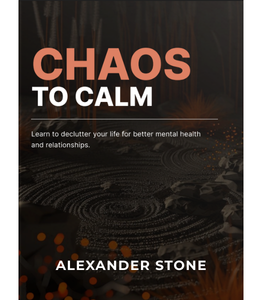
Chaos to Calm
Why This Book Is Listed
Selected for addressing both physical and mental clutter simultaneously rather than treating them as separate problems, recognizing they form a reinforcing cycle.
At a Glance
- Category: Self-Help & Personal Development
- Type: Practical guide with mindfulness techniques
- Approach: Holistic and habit-focused
- Reading Style: Direct and actionable
Short Description
A practical approach to breaking the clutter-stress cycle by addressing both physical disorganization and mental overwhelm through mindfulness and sustainable routines.
What You'll Learn
- Understanding how physical clutter and mental stress reinforce each other in a vicious cycle
- Identifying your specific clutter triggers including sentimental attachment, "what if" thinking, and impulse buying
- Practicing daily mindfulness techniques that research shows reduce stress levels by 40%
- Organizing your mental space through journaling and thought prioritization
- Releasing control over unchangeable factors like the past, others' opinions, and future uncertainty
- Building sustainable calm routines that prevent clutter from accumulating again
Who This Book Is For
This book is a good fit if you:
- Experience physical clutter in your home or workspace that reflects mental overwhelm
- Find yourself procrastinating on decluttering because the task feels impossibly overwhelming
- Notice difficulty focusing when surrounded by mess, with each item acting as a distraction
- Accumulate items through sentimental attachment, "what if" thinking, or guilt about gifts
- Experience stress-related health issues like poor sleep, digestion problems, or constant low-level anxiety
- Feel loss of control over your spaces and want strategies that address root causes
- Understand that treating physical mess alone won't work without addressing the mental patterns creating it
Full Description
When your physical space becomes cluttered, your mind often follows—and mental clutter from tasks, meetings, and stress creates physical disorganization around you. This creates a reinforcing cycle where clutter worsens mental health, which reduces motivation for cleaning, allowing further buildup. You'll learn to recognize both forms of clutter simultaneously: the junk drawers, laundry piles, and dish stacks in your physical space, plus the overwhelming thoughts and racing mind creating mental stress. The book emphasizes that addressing only one side never works—sustainable calm requires tackling both the visible mess and the thought patterns generating it.
Clutter manifests differently for everyone but shares common patterns: forgotten items shoved into drawers, duplicate purchases after "losing" originals, dishes piling until none remain clean, or homes too messy for quick guest preparation. Physical clutter creates difficulty focusing, with each misplaced item acting as a distraction that prevents task completion. The stress impact extends beyond annoyance—research shows chronic clutter keeps your body in a constant mild stress state, elevating cortisol levels that contribute to insomnia, digestion issues, and other health problems over time. You'll learn to identify your specific triggers: sentimental attachment making items hard to discard, "what if I need this" thinking that retains unused possessions, gift guilt preventing disposal of unwanted presents, and impulse buying driven by sales or emotional shopping.
Mindfulness practices form the foundation for breaking the clutter-stress cycle. Research demonstrates that regular practitioners experience 40% lower stress levels plus improved emotional regulation, enhanced focus, and better sleep quality. You'll learn simple daily techniques that fit into existing routines: slowing down intentionally rather than rushing mindlessly through your day, bringing full attention to mundane activities like washing dishes or eating meals, identifying what situations or thoughts trigger stress reactions, and using the 5-senses grounding technique when feeling overwhelmed.
The book also covers mental organization through journaling—transferring racing thoughts onto paper clears mental space, reviewing entries reveals patterns and recurring concerns, and prioritizing helps distinguish actionable items from unproductive worry.
Sustainable calm requires releasing control over unchangeable factors: the past cannot be altered, only learned from; change remains constant and resisting it creates suffering; others' opinions reflect their experiences not your worth; future uncertainty requires present-moment focus on controllable actions. You'll build a daily routine that maintains calm even during busy periods: gentle mornings that avoid immediate stress, 7-9 hours of sleep as your stress management foundation, mental breaks throughout the day through short meditation or walks, positive thinking that challenges automatic negative thoughts, and ending with gratitude practice.
The book emphasizes customizing strategies to fit your lifestyle—no one-size-fits-all approach exists, requiring experimentation to find what works and consistency with chosen practices.