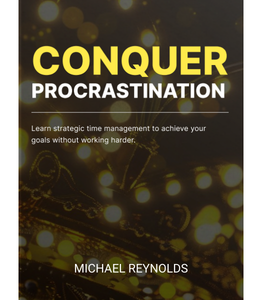
Conquer Procrastination
Why This Book Is Listed
Selected for its grounded, practical approach to overcoming procrastination by reducing mental friction and simplifying action.
This book focuses on behavior change and consistency rather than motivation hype or productivity trends.
At a Glance
- Category: Self-Help & Personal Development
- Type: Practical productivity guide
- Approach: Structured, behavioral, implementation-focused
- Reading Style: Direct and actionable, no fluff.
Short Description
A practical guide to breaking procrastination habits and building steady momentum through simple behavioral techniques and repeatable actions.
What This Book Focuses On
- Understanding why procrastination persists even when motivation is present
- Breaking complex or overwhelming tasks into simple, actionable steps
- Using small behavioral triggers like the five-second rule to start tasks before hesitation takes over
- Reprogramming negative self-talk patterns that reinforce delay habits
- Building consistent productivity habits that last beyond short bursts
Who This Book Is For
This book is a good fit if you:
- Regularly delay important tasks despite wanting to follow through
- Feel overwhelmed by complex or unclear goals
- Struggle to get started more than to stay productive
- Prefer practical techniques over motivational talk
- Want systems that support consistency, not pressure
Full Description
Productivity is often misunderstood as doing more, when in reality it is about investing time and attention in ways that add value to your work, life, and relationships. Many people struggle with productivity because their motivation is driven by external pressures—such as money, status, or expectations—which tend to fade quickly. Sustainable productivity depends on understanding what truly drives you at a deeper level.
This book explores procrastination as a core obstacle to productivity, explaining why even disciplined people delay tasks when goals feel complex or ambiguous. By learning to simplify tasks and clarify expected outcomes, you reduce the mental resistance that fuels procrastination.
A central theme of the book is the role of subconscious habits. Procrastination, like many behaviors, operates automatically unless deliberately reprogrammed. Through techniques such as positive self-talk, affirmations, and behavioral interruption methods like the five-second rule, the book shows how to shift automatic delay patterns into action.
The book also covers practical systems for converting vague goals into concrete milestones, creating realistic and effective to-do lists, eliminating distractions, and working in focused intervals using techniques such as the Pomodoro method. Additional guidance includes learning to say no strategically, delegating tasks where appropriate, and developing habits that support long-term productivity rather than short-term bursts.
Rather than offering a “quick fix,” this guide emphasizes that meaningful productivity improvement requires time, consistency, and honesty about your motivations. The strategies presented are designed to help you work with your psychology—not against it—so progress becomes sustainable rather than exhausting.