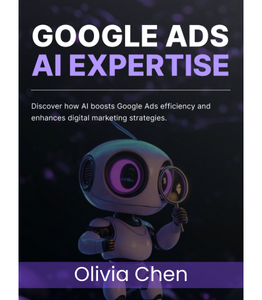
Google Ads AI Expertise
Why This Book Is Listed
Selected for providing practical implementation guidance on Google Ads AI features as they exist currently, focusing on measurable performance improvements rather than theoretical AI discussions.
At a Glance
- Category: Marketing & Sales
- Type: Platform-specific technical guide
- Approach: Implementation-focused and data-driven
- Reading Style: Technical with case studies
Short Description
A practical guide to leveraging AI in Google Ads through responsive search ads, Performance Max campaigns, machine learning optimization, audience segmentation, and real-time adaptation strategies.
What You'll Learn
- Setting up AI-enhanced campaigns including responsive search ads and Performance Max for automated optimization
- Leveraging machine learning algorithms for precise audience segmentation and predictive analytics
- Implementing dynamic ad personalization that adapts creatives to user behavior and preferences
- Using real-time campaign optimization adjusting bids, placements, and targeting automatically
- Analyzing performance data and AI-generated insights for continuous improvement
- Understanding ethical considerations and limitations of AI advertising systems
Who This Book Is For
This book is a good fit if you:
- Run Google Ads campaigns and want to leverage AI features for better performance
- Need to improve campaign efficiency and ROI through automated optimization
- Are beginners navigating Google Ads interface wanting to use AI tools correctly from start
- Are experienced advertisers seeking cutting-edge optimization strategies beyond manual management
- Want practical implementation guidance on specific AI features currently available in platform
- Need to justify advertising budgets with measurable performance improvements
- Understand that AI augments strategy but requires human oversight and ethical considerations
Full Description
The integration of AI into Google Ads has fundamentally transformed digital advertising, enabling businesses to achieve unprecedented precision, efficiency, and profitability. AI-powered features now handle tasks that previously required constant manual management: responsive search ads automatically test headline and description combinations finding highest-performing variants, Performance Max campaigns optimize across Google's entire inventory including Search, Display, YouTube, and Gmail using machine learning, and dynamic ad personalization adapts creatives to individual user behavior and preferences in real-time. These capabilities save time while improving performance by continuously testing and learning from billions of user interactions. The shift from manual campaign management to AI-assisted optimization allows marketers focusing on strategy and creative direction while algorithms handle tactical execution and bid adjustments.
Machine learning algorithms enable precise audience segmentation beyond traditional demographic targeting. Predictive analytics identify users most likely to convert based on behavioral patterns, browsing history, purchase intent signals, and engagement metrics. Real-time campaign optimization adapts to evolving market dynamics by automatically adjusting bids for different times, devices, locations, and audience segments based on conversion probability. This responsiveness proves especially valuable in competitive markets where manual bid adjustments lag behind rapid changes in auction dynamics. Audience targeting uses AI to discover new customer segments sharing characteristics with existing high-value customers, expanding reach beyond manually defined targeting parameters while maintaining relevance and conversion quality. Smart Bidding strategies like Target CPA and Target ROAS use machine learning processing vast data sets identifying patterns humans cannot detect manually.
Setting up AI-enhanced campaigns requires understanding which features serve specific objectives. Responsive search ads provide multiple headlines and descriptions allowing Google's AI testing combinations and serving highest-performing variants to each user. Performance Max campaigns require quality creative assets and clear conversion goals but then autonomously optimize placement, bidding, and audience targeting across channels. Dynamic ad personalization adapts messaging, offers, and visuals based on user context including previous site interactions, search history, and demographic signals. Advanced strategies for ad creatives involve providing diverse assets allowing AI maximum flexibility testing combinations, writing ad copy focused on benefits and clear calls-to-action enabling effective automated testing, and continuously feeding performance data back into creative development identifying which themes and messages resonate most strongly with different audience segments.
Performance analysis in AI-driven campaigns shifts from micro-managing individual keywords and bids to monitoring overall campaign health, conversion quality, and strategic direction. Key metrics include conversion rate trends, cost per acquisition compared to targets, attribution patterns showing customer journey touchpoints, and audience insight reports revealing emerging segments. Real-world case studies demonstrate measurable impact: e-commerce businesses reducing cost per acquisition by 30-40% through Smart Bidding, service companies expanding qualified lead volume by 50%+ using Performance Max, and B2B advertisers improving conversion quality through AI audience targeting finding prospects matching ideal customer profiles. Ethical considerations include transparency about data usage, avoiding discriminatory targeting even when AI suggests it, maintaining brand safety through appropriate content exclusions, and understanding AI limitations requiring human oversight for strategic decisions, creative direction, and ensuring alignment with business values. Success requires treating AI as powerful tool augmenting human strategy rather than complete replacement for marketing expertise and judgment.